
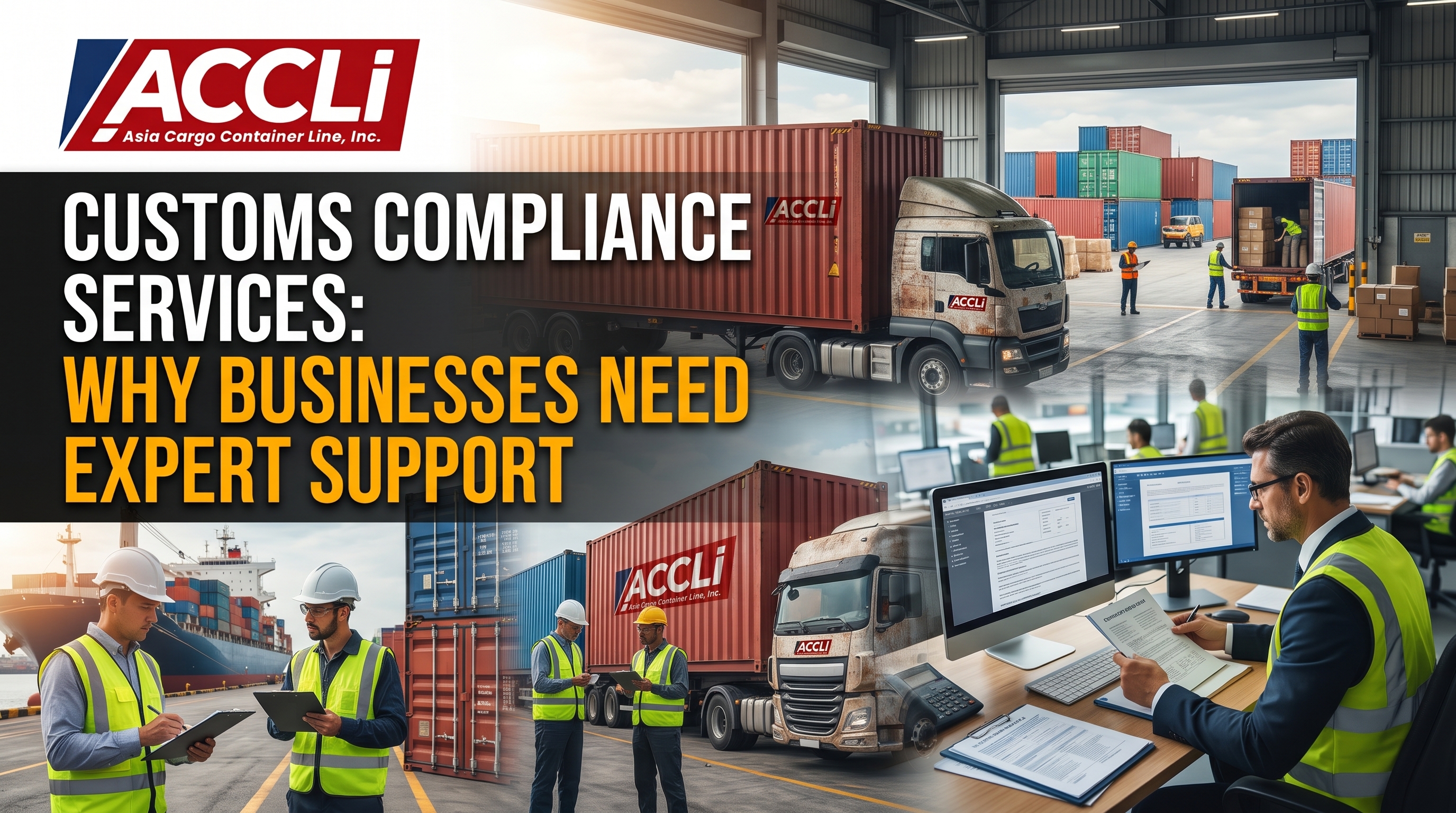
Importing and exporting goods involves more than arranging transportation and paying shipping costs. Businesses must also comply with customs regulations, prepare accurate documentation, secure the necessary permits, and meet government requirements before their shipments can be released. Even a small mistake in the process can lead to delays, additional expenses, penalties, or other operational challenges.
For companies engaged in international trade, customs compliance services help manage these responsibilities and reduce the risks associated with cross-border transactions. Working with experienced customs professionals allows businesses to navigate regulatory requirements, maintain accurate declarations, and keep their supply chains moving efficiently.
In the Philippines, customs compliance is particularly important because importers must follow the Customs Modernization and Tariff Act (CMTA), relevant Bureau of Customs (BOC) regulations, and requirements imposed by other government agencies.
Understanding Customs Compliance in International Trade
Customs compliance involves adhering to the laws, regulations, procedures, and documentation requirements governing the import and export of goods. It ensures that all shipments are accurately declared, applicable duties and taxes are properly assessed and paid, and all necessary permits, licenses, and regulatory clearances are obtained to facilitate lawful and seamless cross-border trade.
In the Philippines, the Bureau of Customs (BOC) is responsible for enforcing customs laws and regulations, as well as overseeing the clearance of imported and exported goods. Depending on the nature and classification of the commodities, businesses may also be required to secure additional permits, licenses, and regulatory clearances from relevant government agencies to ensure full compliance with applicable trade and importation requirements.
Common customs compliance responsibilities include:
- Preparing and reviewing commercial invoices and packing lists
- Ensuring accurate tariff classification and HS codes
- Declaring the correct customs value and country of origin
- Securing required import permits and regulatory clearances
- Filing accurate goods declarations
- Paying applicable customs duties, taxes, and charges
- Maintaining importation records for audit and verification
These requirements make customs compliance an important part of supply chain management rather than simply an administrative task.
Why Businesses Need Professional Customs Compliance Services
Managing customs requirements internally can be challenging, particularly for businesses handling multiple shipments, different product categories, or international suppliers. Professional support helps companies address these responsibilities with greater accuracy and consistency.
1. Prevent Costly Documentation Errors
Accurate, complete, and consistent documentation is essential for smooth customs processing. Discrepancies among commercial invoices, packing lists, bills of lading, and customs declarations may lead to additional scrutiny, verification requirements, penalties, or unnecessary shipment delays.
Professional customs brokerage support helps ensure that all required documents are thoroughly reviewed and properly prepared before submission. By verifying product descriptions, quantities, declared values, and other critical shipment details, businesses can minimize documentation errors, avoid costly complications, and maintain compliance with customs regulations.
2. Ensure Accurate Tariff Classification
Proper tariff classification is essential in determining the correct customs duties, taxes, and regulatory requirements applicable to imported goods. Each product must be assigned the appropriate Harmonized System (HS) code based on its nature, composition, technical specifications, and intended use.
Misclassification can lead to incorrect duty assessments, regulatory non-compliance, potential penalties, and unexpected importation costs. Engaging customs professionals helps businesses evaluate product descriptions and technical specifications to establish the appropriate tariff classification and ensure accurate declarations.
For goods involving complex or ambiguous classifications, businesses may also seek an advance ruling from the Bureau of Customs (BOC). This provides greater certainty regarding tariff classification, customs valuation, or rules of origin, helping minimize disputes and support more predictable importation processes.
3. Prevent Unnecessary Shipment Delays
Delays in customs clearance can disrupt production schedules, inventory replenishment, customer commitments, and distribution operations.
Missing documents, incorrect declarations, and unresolved regulatory requirements may require additional coordination before goods can be released.
An experienced customs partner helps businesses prepare requirements in advance, monitor clearance activities, and address documentation concerns promptly. Although customs examination and processing times remain subject to BOC procedures, proper preparation can help avoid preventable delays.
4. Stay Compliant With Philippine Customs Regulations
Philippine customs regulations, administrative issuances, and import-export requirements are subject to periodic changes. Businesses must stay informed of the latest regulatory developments to ensure that their international trade activities remain compliant and avoid unnecessary disruptions.
Professional customs brokerage support helps businesses interpret applicable regulations, identify mandatory documentation, and coordinate with relevant government agencies to secure the necessary permits, licenses, and clearances. This ensures that shipments meet current regulatory standards throughout the importation and exportation process.
Compliance is particularly critical for regulated commodities such as food products, chemicals, electronics, and other goods subject to specialized government controls. Working with experienced customs professionals helps minimize regulatory risks, prevent processing delays, and maintain a more efficient and compliant supply chain.
5. Improve Customs Valuation and Duty Management
Customs valuation directly affects the calculation of duties and taxes. Businesses must declare the appropriate customs value and provide supporting documents when required.
Incorrect valuation or incomplete supporting information can lead to reassessment and additional financial obligations.
Customs professionals can help review transaction documents, freight and insurance costs, and other relevant valuation information to support accurate declarations. This allows businesses to improve cost planning while meeting applicable valuation rules.
6. Strengthen Recordkeeping and Audit Readiness
Customs compliance does not end when a shipment is released. Importers must maintain relevant records and supporting documents for possible post-clearance verification or audit.
These may include commercial invoices, packing lists, bills of lading, permits, goods declarations, payment records, and related correspondence.
Under the CMTA, importers are generally required to keep records for three years from the date of final payment of duties and taxes or customs clearance, whichever is later.
Organized documentation helps businesses respond to audit requirements, verify previous transactions, and maintain accountability across importation activities.
How Expert Customs Support Improves Business Operations
Beyond meeting regulatory requirements, professional customs support contributes to more efficient business operations.
When customs documentation is properly prepared and clearance activities are coordinated effectively, companies can improve shipment planning and reduce avoidable administrative work.
Businesses can benefit from:
- Better cost visibility: More accurate duty and tax estimates support importation budgeting.
- Improved shipment coordination: Timely preparation helps align customs clearance with transportation and warehouse schedules.
- Reduced administrative workload: Internal teams can focus on procurement, sales, inventory, and other core activities.
- Stronger supplier coordination: Clear documentation requirements help reduce information gaps between suppliers, importers, and logistics partners.
- More consistent compliance practices: Standardized procedures help businesses manage recurring shipments and documentation requirements.
For companies importing regularly, these improvements can support long-term supply chain reliability and operational efficiency.
Choosing the Right Customs Compliance Partner
Selecting a customs service provider requires more than comparing service fees. Businesses should consider the provider’s experience, regulatory knowledge, documentation practices, and ability to coordinate with other logistics activities.
Before choosing a partner, consider the following factors:
Industry Experience and Regulatory Knowledge
Choose a provider with practical experience in Philippine customs procedures and a clear understanding of applicable importation and exportation requirements.
Accurate Documentation and Processing
A reliable partner should prioritize document review, accurate declarations, and timely coordination throughout the clearance process.
Communication and Shipment Coordination
Regular updates help businesses monitor shipment progress, respond to requirements, and coordinate delivery schedules.
Integrated Logistics Capabilities
Working with a provider that understands freight forwarding, customs brokerage, warehousing, and distribution can help improve coordination across different stages of the supply chain.
How ACCLI Supports Customs Compliance and Brokerage Requirements
For businesses operating in the Philippines, having an experienced logistics partner can make customs coordination more manageable.
Asia Cargo Container Line, Inc. (ACCLI) provides customs brokerage services supported by over 30 years of experience in Philippine customs regulations and logistics operations. As a BOC-accredited customs brokerage provider, ACCLI helps businesses navigate customs procedures and coordinate the documentation and clearance requirements involved in international trade.
Through its logistics capabilities, ACCLI supports businesses seeking dependable coordination across freight forwarding, customs brokerage, warehousing, and distribution.
Whether managing recurring importations or handling shipments with specific documentation requirements, businesses can benefit from working with a partner that understands the importance of accuracy, regulatory compliance, and efficient cargo movement.
Explore ACCLI’s logistics services and discover how professional support can help strengthen your supply chain operations.
Conclusion
Customs compliance is a critical responsibility for businesses involved in international trade. Inaccurate documentation, incorrect tariff classification, missing permits, and valuation errors can create financial and operational challenges that affect the entire supply chain.
Investing in professional customs compliance services helps businesses manage regulatory responsibilities, reduce preventable errors, and improve coordination throughout the importation and exportation process.
With the right customs partner, companies can approach international trade with greater confidence while keeping their operations organized, compliant, and prepared for changing requirements.
Frequently Asked Questions
What are customs compliance services?
Customs compliance services help businesses meet import and export regulations through documentation review, tariff classification support, customs valuation guidance, permit coordination, goods declaration processing, and other customs-related requirements.
Why is customs compliance important for importers in the Philippines?
It helps importers comply with the Customs Modernization and Tariff Act, BOC regulations, and applicable requirements from other government agencies. Proper compliance can reduce the risk of penalties, additional assessments, and preventable shipment delays.
What documents are commonly required for customs clearance?
Common documents include the commercial invoice, packing list, bill of lading or air waybill, goods declaration, and applicable permits or certificates. Additional documents may be required depending on the commodity and specific transaction.
Can a customs broker handle import documentation?
Yes. A licensed customs broker may assist with customs declarations and related processing on behalf of an importer, subject to applicable laws, authorizations, and BOC requirements.
How can businesses avoid customs clearance delays?
Businesses can reduce preventable delays by preparing complete documentation, verifying tariff classifications and declared values, securing required permits, and coordinating with experienced customs professionals before shipment arrival.
