
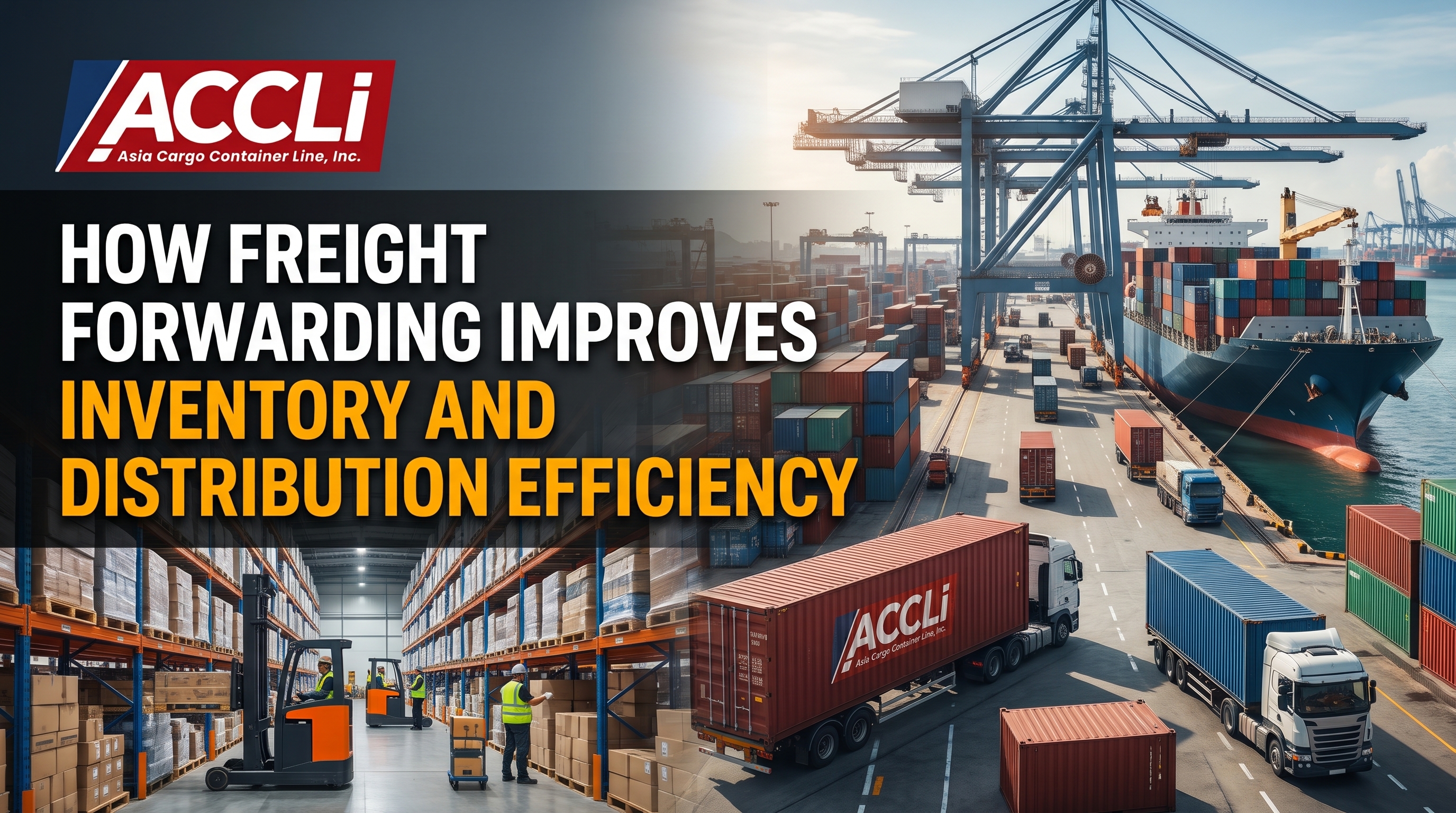
Freight forwarding plays an essential role in helping businesses maintain efficient inventory management and distribution operations. In today’s competitive Philippine logistics industry, companies must ensure that products move smoothly from suppliers to warehouses and eventually to customers. Delays, poor shipment coordination, and inaccurate inventory records can disrupt business operations and increase logistics expenses.
For importers, exporters, manufacturers, retailers, and e-commerce businesses, managing cargo movement requires more than arranging transportation. It involves coordinating shipment schedules, customs documentation, warehouse receiving, inventory replenishment, and product distribution.
Freight forwarding helps businesses manage these interconnected activities by organizing cargo transportation and improving coordination throughout the supply chain. With proper shipment planning and logistics management, companies can maintain better inventory visibility, reduce unnecessary delays, and improve the movement of products between different locations.
Understanding how freight forwarding supports inventory and distribution operations allows businesses to identify opportunities to improve efficiency, manage logistics costs, and provide more reliable customer service.
Understanding the Role of Freight Forwarding in Supply Chain Management
Freight forwarding involves coordinating and arranging the transportation of goods from their origin to their intended destination. It connects businesses with shipping lines, airlines, trucking companies, customs brokers, and other logistics service providers. However, its role extends beyond transportation arrangements. Freight forwarding also supports supply chain coordination by helping businesses manage shipment schedules, monitor cargo movement, organize documentation, and prepare deliveries according to operational requirements.
In the Philippines, where international shipments frequently pass through major gateways such as the Port of Manila and Manila International Container Port, proper coordination is particularly important. Imported goods may need to undergo several stages before reaching their final destination, including international transportation, customs processing, cargo release, trucking, and warehouse receiving.
Without proper coordination, delays in one stage can affect the entire supply chain.
A well-managed freight forwarding process connects these activities, helping businesses maintain a more organized and predictable flow of goods.
How Freight Forwarding Improves Inventory Management
Inventory management depends on the availability and timely movement of products. Businesses must maintain sufficient stock to meet customer demand while avoiding excessive inventory that increases storage and operating expenses. Freight forwarding supports inventory management by improving coordination between suppliers, transportation providers, and receiving warehouses.
Better Shipment Planning and Inventory Replenishment
Shipment planning helps businesses determine when products should be transported and when inventory is expected to arrive.
For example, a Philippine retailer importing products from overseas must consider supplier lead times, shipping schedules, customs processing, and domestic transportation arrangements.
A freight forwarder helps coordinate these activities so businesses can prepare inventory replenishment schedules more effectively.
This allows companies to:
- Align shipment schedules with purchasing requirements.
- Prepare warehouses for incoming cargo.
- Reduce uncertainty surrounding product arrival.
- Maintain more consistent inventory availability.
- Minimize disruptions caused by poorly coordinated shipments.
When transportation schedules are aligned with inventory requirements, businesses can make better purchasing and stocking decisions.
Improved Inventory Visibility and Shipment Tracking
Inventory visibility allows businesses to determine where their products are and when they are expected to become available.
Without reliable shipment information, companies may struggle to identify whether their products are still in transit, undergoing customs processing, awaiting cargo release, or ready for warehouse receiving.
Modern freight forwarding operations increasingly use digital tracking systems and shipment management platforms to provide updates throughout the transportation process.
These technologies help businesses monitor shipment milestones, review estimated arrival times, and prepare for potential delivery delays.
Improved shipment visibility also allows purchasing, warehouse, and distribution teams to coordinate their activities using more accurate information.
Better Inventory Control and Reduced Stock Disruptions
Poor shipment coordination can result in inventory shortages or excessive stock levels.When shipments arrive later than expected, businesses may experience unavailable products, interrupted production schedules, and missed customer commitments. Conversely, poorly planned replenishment can result in excess inventory that occupies valuable warehouse space.
Freight forwarding helps businesses improve transportation scheduling and cargo coordination, making inventory replenishment more predictable.
Although transportation conditions and supplier performance can still affect delivery schedules, proper logistics planning helps companies manage inventory risks and respond to unexpected changes more effectively.
How Freight Forwarding Strengthens Distribution Efficiency
Distribution efficiency refers to how effectively businesses move products from suppliers and warehouses to their intended destinations.
An efficient distribution process requires organized transportation schedules, proper cargo handling, accurate delivery information, and coordination between different logistics operations.
Freight forwarding contributes to this process by connecting international cargo transportation with domestic distribution requirements.
Coordinated Transportation and Delivery Scheduling
Transportation coordination helps businesses organize the movement of goods across different locations.
For example, an importer receiving containerized cargo at the Port of Manila may need to arrange customs processing, container withdrawal, trucking, and warehouse delivery.
Without proper coordination, delays between these activities can result in additional expenses and inefficient cargo movement.
Freight forwarding helps businesses organize transportation requirements and coordinate with the appropriate service providers.
This improves the movement of goods from international suppliers to local warehouses and distribution facilities.
Better Warehouse and Distribution Center Coordination
Freight forwarding and warehousing are closely connected because transportation schedules directly affect warehouse operations.
When shipments arrive without proper planning, warehouses may experience receiving congestion, inefficient storage allocation, and delays in inventory processing.
Coordinating cargo arrivals with warehouse capacity helps businesses organize unloading, inspection, storage, and inventory recording.
Companies can further improve warehouse operations through:
- Scheduled cargo receiving.
- Accurate inventory documentation.
- Organized storage allocation.
- Warehouse Management Systems (WMS).
- Coordinated order fulfillment activities.
For businesses operating multiple distribution facilities, this coordination supports more consistent inventory movement and better utilization of warehouse resources.
Improved Cargo Movement Across Philippine Regions
Businesses distributing products throughout the Philippines must consider geographical challenges, transportation availability, and inter-island shipping requirements.
Moving goods from Metro Manila to destinations in Visayas and Mindanao often involves multiple transportation arrangements.
Freight forwarding helps coordinate these movements by connecting sea freight, domestic trucking, and other transportation services according to shipment requirements.
For example, a distributor supplying retailers in Manila, Cebu, and Davao needs an organized logistics process to maintain product availability across different markets.
Effective coordination helps reduce unnecessary handling, improve delivery planning, and support more reliable regional distribution.
The Importance of Technology in Modern Freight Forwarding
Technology continues to transform how logistics providers manage cargo transportation and supply chain operations.
Digital freight management, artificial intelligence, real-time tracking, and warehouse automation are helping businesses improve operational visibility and make better logistics decisions.
Real-Time Shipment Monitoring
Shipment tracking systems provide information about cargo movement and transportation milestones.
Businesses can use these updates to monitor shipment progress, prepare warehouse receiving schedules, and communicate more accurately with customers.
Real-time visibility is particularly valuable for companies managing multiple shipments or time-sensitive inventory.
Digital Freight Management and Automation
Digital freight management platforms help organize shipment bookings, transportation documentation, and logistics coordination.
Automation can also reduce repetitive administrative tasks and improve information accuracy.
For businesses handling large shipment volumes, digital processes can make logistics coordination more organized and efficient.
Artificial Intelligence in Logistics Planning
Artificial intelligence is increasingly being explored for demand forecasting, transportation optimization, and supply chain risk identification.
AI-powered systems can analyze historical shipment information and operational patterns to support more informed logistics decisions.
When combined with accurate data and experienced logistics professionals, these technologies can help businesses improve planning and operational responsiveness.
Sustainable logistics is another growing consideration, as companies look for opportunities to optimize transportation routes, reduce unnecessary cargo movement, and improve resource utilization.
How Freight Forwarding Helps Control Logistics Costs
Logistics expenses can significantly affect business profitability. Transportation charges, port-related expenses, storage fees, cargo handling, and additional delivery costs must all be considered when managing supply chain operations.
Freight forwarding helps businesses manage these expenses through organized transportation planning and shipment coordination.
For instance, shipment consolidation may help importers reduce transportation expenses when smaller cargo volumes can be combined into a suitable shipping arrangement.
Proper scheduling can also help businesses avoid unnecessary delays, additional storage charges, and inefficient transportation arrangements.
Businesses should consider the total cost of logistics rather than focusing only on the lowest transportation rate.
Important cost considerations include:
- International freight charges.
- Customs duties and applicable taxes.
- Port and terminal charges.
- Container demurrage and detention.
- Warehousing and storage expenses.
- Domestic transportation and delivery costs.
Understanding these expenses allows companies to develop more realistic logistics budgets and identify opportunities for operational improvement.
Freight Forwarding and Customs Compliance in the Philippines
Customs compliance is an important part of international cargo transportation. Importers and exporters must ensure that their shipments meet applicable documentation and regulatory requirements.
In the Philippines, the Bureau of Customs (BOC) oversees customs procedures and the implementation of relevant import and export regulations.
Incomplete documentation, inaccurate cargo declarations, or missing permits may result in shipment delays, additional expenses, or regulatory complications.
Freight forwarding coordination helps businesses organize shipping information and work with customs brokerage professionals to support cargo processing.
Common shipping documents include:
- Commercial invoices.
- Packing lists.
- Bills of lading or airway bills.
- Certificates of origin, when applicable.
- Import and export permits, when required.
- Other supporting customs documents.
Businesses can consult the Philippine Bureau of Customs and the World Customs Organization for official customs information and international trade guidance.
Working with experienced logistics professionals helps businesses manage documentation requirements and improve coordination throughout the import and export process.
Choosing the Right Freight Forwarding Partner for Your Business
Selecting a freight forwarding company is an important business decision because logistics performance can directly affect inventory availability, distribution schedules, and customer satisfaction.
Businesses should evaluate more than transportation rates when comparing logistics providers.
Consider the following factors:
Industry Experience: Look for a provider with practical knowledge of Philippine customs procedures and experience handling your cargo types.
Transportation Network: Evaluate its ability to coordinate international shipping, domestic trucking, and regional distribution.
Customs Brokerage Support: Determine whether the provider can assist with customs documentation and clearance coordination.
Warehousing Capabilities: Consider whether it can support inventory storage, warehouse management, and fulfillment requirements.
Shipment Visibility: Ask about available tracking systems, shipment updates, and reporting procedures.
Operational Communication: Look for a logistics partner that provides timely updates and responsive customer support.
The right provider should understand your business requirements and offer logistics solutions that support your supply chain objectives.
How Asia Cargo Container Line, Inc. Supports Inventory and Distribution Operations
For businesses looking for integrated logistics support in the Philippines, Asia Cargo Container Line, Inc. (ACCLI) provides logistics services designed to support cargo transportation, inventory management, and distribution operations.
With over 30 years of experience in the Philippine logistics industry, ACCLI understands the importance of reliable logistics coordination and compliance with local requirements.
Its logistics capabilities include:
- Freight Forwarding: Coordinated cargo transportation and shipment management.
- Customs Brokerage: Support for customs documentation and clearance requirements.
- Warehousing and Fulfillment: Secure warehouse solutions, inventory management, and order fulfillment.
- Cold Chain Solutions: Logistics support for temperature-sensitive cargo.
- Trucking and Distribution: Transportation and delivery coordination.
- Value-Added Services: Additional logistics support based on business requirements.
By connecting different logistics services, ACCLI helps businesses manage cargo movement and address supply chain challenges through coordinated logistics solutions.
Companies looking to improve their transportation and distribution operations can explore ACCLI’s logistics services to identify solutions that match their operational requirements.
Conclusion: Building a More Efficient Supply Chain Through Freight Forwarding
Freight forwarding plays an essential role in improving inventory and distribution efficiency by connecting transportation planning, shipment monitoring, customs coordination, warehousing, and delivery operations.
For Philippine businesses managing international imports, domestic transportation, and regional distribution, effective logistics coordination helps maintain product availability, manage operating expenses, and improve delivery reliability.
As supply chains become increasingly complex, businesses must work with logistics providers that understand their requirements and can support the movement of goods throughout different stages of the supply chain.
Looking to improve your inventory and distribution operations? Partner with Asia Cargo Container Line, Inc. (ACCLI) for logistics solutions that support your business from international cargo transportation to warehousing and final distribution.
Visit https://asiacargo.com.ph/ to explore ACCLI’s logistics capabilities and discuss your business requirements.
Frequently Asked Questions (FAQs)
1. What is freight forwarding?
Freight forwarding is the coordination and arrangement of cargo transportation from one location to another. It involves managing shipment arrangements, transportation providers, shipping documentation, and cargo movement.
2. How does freight forwarding improve inventory management?
Freight forwarding improves inventory management by helping businesses coordinate shipment schedules, monitor cargo movement, and estimate product arrival dates. This supports better inventory replenishment and reduces the risk of unexpected stock shortages.
3. How does freight forwarding improve distribution efficiency?
It improves distribution efficiency by coordinating transportation schedules, cargo handling, warehouse receiving, and delivery arrangements. This helps businesses move products more efficiently between suppliers, warehouses, distribution centers, and customers.
4. Can freight forwarding help reduce logistics costs?
Yes. Effective shipment planning, cargo consolidation, and transportation coordination can help businesses avoid unnecessary handling, storage expenses, and transportation inefficiencies.
5. What is the difference between freight forwarding and warehousing?
Freight forwarding focuses on arranging and coordinating cargo transportation, while warehousing involves storing, handling, and managing inventory. Both activities work together to support an efficient supply chain.
6. Why is shipment tracking important?
Shipment tracking provides visibility into cargo movement and estimated arrival times. It helps businesses prepare for incoming inventory, coordinate warehouse activities, and respond to potential delivery delays.
7. Does freight forwarding include customs clearance?
Not necessarily. Freight forwarding and customs brokerage are related but separate services. Some logistics providers offer both, allowing businesses to coordinate transportation and customs processing through one logistics partner.
8. How can businesses choose a reliable freight forwarding company in the Philippines?
Businesses should evaluate industry experience, transportation capabilities, customs brokerage support, warehousing services, shipment visibility, regulatory knowledge, and customer service when selecting a logistics provider.
Email: inquiries@asiacargo.com.ph
Phone: +63 (2) 8527 2337 / +63 (2) 5328 3032
Office Locations:
Head Office
No. 215, Unit 3107 World Trade Exchange Bldg., Juan Luna St., Binondo, Manila, Metro Manila, Philippines 1008
Port Office
ECJ Building, Rm. 101, Real St., Intramuros, Manila, Metro Manila, Philippines, 1002
