
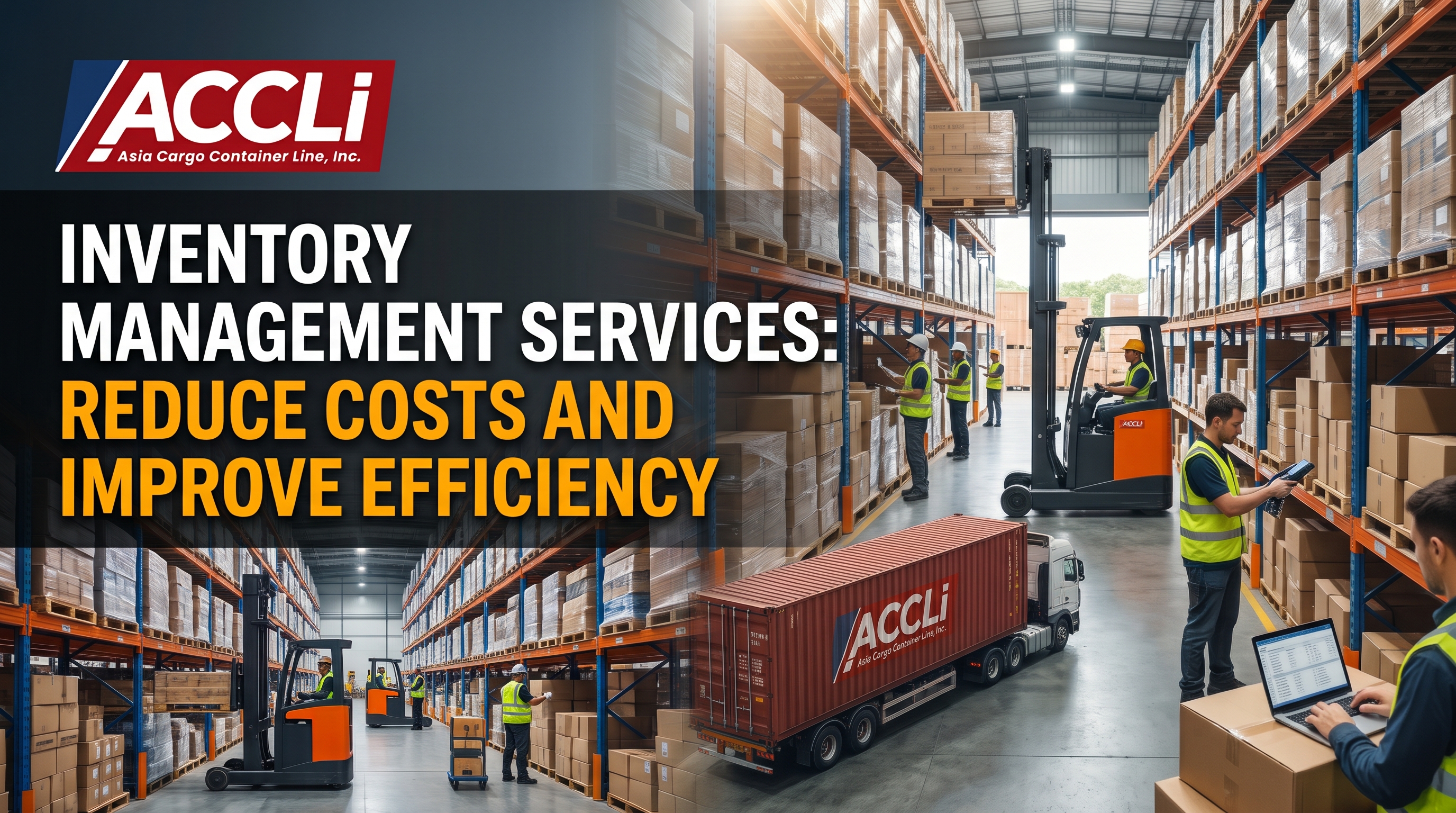
Managing inventory effectively is essential for businesses that want to control operating costs, maintain product availability, and meet customer demand. Without proper inventory planning and monitoring, companies may experience excess stock, stockouts, storage inefficiencies, and unnecessary expenses that affect profitability.
Professional inventory management services help businesses organize, monitor, and control their inventory throughout the supply chain. By combining inventory tracking, storage processes, stock monitoring, and operational planning, companies can improve visibility over their goods and make better decisions regarding purchasing, replenishment, and distribution.
For businesses handling large volumes of products or operating across multiple locations, effective inventory management is particularly important. It helps maintain a balance between available stock and actual demand while supporting more efficient logistics operations.
What Are Inventory Management Services?
Inventory management services involve the processes and operational support used to monitor, organize, store, and control products throughout their movement within a supply chain.
These services help businesses maintain accurate stock records, manage inventory movement, identify replenishment requirements, and improve the organization of stored goods.
Depending on the logistics provider and operational arrangement, inventory management services may include:
- Inventory monitoring and stock tracking
- Receiving and inventory verification
- Stock organization and storage management
- Inventory reporting and reconciliation
- Order preparation and stock release
- Stock replenishment coordination
- Inventory movement documentation
- Warehouse inventory control
By implementing organized inventory processes, businesses can reduce stock discrepancies, improve product availability, and maintain better control over their operational resources.
Why Inventory Management Is Important for Businesses
Inventory represents a significant investment for businesses involved in manufacturing, retail, distribution, importation, and e-commerce. Poor inventory management can tie up capital, increase storage expenses, and disrupt operations.
Effective inventory management helps businesses maintain the right quantity of products while ensuring that goods are available when needed.
Maintain Accurate Stock Levels
Accurate inventory records allow businesses to understand how much stock is available, where products are stored, and when replenishment is necessary.
Without reliable inventory information, companies may purchase unnecessary quantities or experience stock shortages that affect customer orders and business operations.
Inventory management services help establish organized stock monitoring procedures that improve inventory visibility and support more accurate purchasing decisions.
Prevent Overstocking and Stockouts
Overstocking can result in excessive storage costs, unused inventory, product deterioration, and capital tied up in goods that are not immediately needed.
Stockouts, on the other hand, may result in missed sales opportunities, delayed deliveries, and customer dissatisfaction.
Proper inventory monitoring helps businesses identify stock movement patterns and replenish products based on demand, available inventory, and operational requirements.
Improve Warehouse Organization
Organized inventory management helps warehouse personnel locate products more efficiently, reduce unnecessary handling, and maintain accurate stock records.
Proper labeling, storage locations, stock rotation, and inventory tracking procedures contribute to a more organized warehouse environment.
These improvements can help reduce picking errors, improve stock accessibility, and support more efficient warehouse operations.
How Inventory Management Services Help Reduce Costs
Inventory-related expenses can affect profitability when businesses lack effective stock control and operational planning. Professional inventory management services help identify inefficiencies and support better resource utilization.
1. Reduce Excess Inventory and Storage Expenses
Holding more inventory than necessary can increase warehousing costs, handling expenses, and the risk of product damage or obsolescence.
Inventory monitoring helps businesses identify slow-moving goods, assess stock requirements, and make informed replenishment decisions.
With better inventory visibility, companies can work toward maintaining more appropriate stock levels and maximizing the use of available storage space.
2. Minimize Inventory Losses and Discrepancies
Inventory discrepancies may result from misplaced products, recording errors, unauthorized movement, damaged goods, or inconsistent stock handling procedures.
Regular inventory reconciliation and organized stock movement documentation help businesses identify discrepancies and investigate their causes.
Inventory management services support more consistent monitoring and accountability throughout warehouse operations.
3. Improve Purchasing and Replenishment Decisions
Businesses that rely on inaccurate stock records may purchase goods too early, too late, or in quantities that do not match actual demand.
Inventory management helps purchasing teams monitor stock availability and identify when replenishment is necessary.
This supports better purchasing decisions, reduces unnecessary inventory accumulation, and helps companies plan procurement activities more efficiently.
4. Optimize Warehouse Space Utilization
Poor inventory organization can result in unused warehouse space, inefficient storage arrangements, and unnecessary product handling.
Proper stock organization and inventory location management help businesses maximize available storage capacity.
By identifying inventory movement patterns and organizing products based on handling requirements and accessibility, companies can improve storage efficiency and warehouse productivity.
5. Reduce Operational Errors and Unnecessary Handling
Inventory errors can create additional work for warehouse personnel, purchasing teams, and customer service departments.
Misplaced goods, incorrect stock releases, and inaccurate inventory records may require repeated verification and handling.
Standardized inventory processes help reduce preventable errors and support more efficient warehouse activities.
How Inventory Management Services Improve Operational Efficiency
Reducing costs is only one benefit of inventory management. Proper inventory control also improves how businesses coordinate their warehouse activities, purchasing requirements, and order fulfillment processes.
Improve Inventory Visibility
Inventory visibility allows businesses to monitor stock levels, inventory movement, and product availability.
With accurate and timely inventory information, companies can identify shortages, review stock movement, and make informed operational decisions.
Inventory visibility is particularly valuable for businesses managing multiple product categories, suppliers, warehouse locations, or distribution channels.
Support Faster Order Fulfillment
Organized inventory helps warehouse teams locate, retrieve, and prepare products more efficiently.
When stock records and storage locations are properly maintained, picking and order preparation activities can become more organized and consistent.
This helps businesses improve order processing and coordinate shipments more effectively.
Strengthen Supply Chain Coordination
Inventory management is closely connected to procurement, warehousing, freight forwarding, transportation, and distribution.
Accurate inventory information helps businesses coordinate deliveries, replenishment schedules, and product movement across different supply chain activities.
When inventory processes are properly integrated with logistics operations, businesses can improve coordination between suppliers, warehouse teams, and delivery partners.
Support Business Growth and Scalability
As businesses expand, inventory management becomes more complex. Companies may handle more product categories, larger shipment volumes, additional warehouse locations, and more frequent customer orders.
Organized inventory management processes help businesses maintain better stock visibility and operational consistency as their requirements increase.
This can support more manageable growth without relying entirely on manual inventory monitoring and inefficient storage practices.
Best Practices for Effective Inventory Management
Businesses can improve inventory management by implementing consistent procedures and monitoring inventory performance regularly.
Establish Accurate Inventory Records
Maintain updated inventory information, including product descriptions, quantities, storage locations, and stock movement records.
Implement Regular Stock Reconciliation
Compare physical inventory with recorded quantities to identify discrepancies and correct inventory records when necessary.
Use Appropriate Stock Rotation Methods
Apply stock rotation practices such as FIFO (First In, First Out) where appropriate to help reduce the risk of product deterioration, expiration, or obsolescence.
Monitor Inventory Performance
Review inventory turnover, stock availability, slow-moving products, discrepancies, and replenishment requirements to identify opportunities for improvement.
Maintain Organized Storage Procedures
Use appropriate labeling, storage locations, and handling procedures to improve product accessibility and warehouse organization.
Work With an Experienced Logistics Partner
Businesses managing large inventory volumes or complex logistics requirements may benefit from professional warehousing and inventory support.
An experienced logistics provider can help businesses establish organized storage processes, coordinate inventory movement, and support warehouse operations based on their requirements.
How ACCLI Supports Inventory Management and Warehousing
Effective inventory management requires more than keeping products inside a warehouse. Businesses need organized storage, reliable inventory monitoring, proper handling, and coordinated logistics activities to maintain efficient operations.
Asia Cargo Container Line, Inc. (ACCLI) provides warehousing and logistics solutions designed to support businesses with their storage, inventory, and supply chain requirements.
With over 30 years of logistics experience, ACCLI supports businesses through warehousing and fulfillment, freight forwarding, customs brokerage, trucking and distribution, cold chain solutions, and value-added services.
Its warehousing capabilities support businesses seeking secure storage solutions, organized inventory management, and reliable logistics coordination.
By working with an experienced logistics partner, companies can improve inventory organization, support stock monitoring processes, and coordinate inventory movement with other logistics activities.
Explore ACCLI’s warehousing and logistics services to discover solutions for your business storage and supply chain requirements.
Conclusion
Inventory management plays a critical role in controlling business costs and maintaining operational efficiency. Poor stock management can lead to excess inventory, storage inefficiencies, stock discrepancies, and disruptions that affect the entire supply chain.
Professional inventory management services help businesses improve stock visibility, organize warehouse operations, reduce preventable inventory errors, and support more informed purchasing and replenishment decisions.
By implementing effective inventory practices and working with reliable logistics partners, businesses can improve inventory control, optimize storage resources, and strengthen their supply chain operations.
Frequently Asked Questions
What are inventory management services?
Inventory management services involve monitoring, organizing, tracking, and controlling stock to help businesses maintain accurate inventory records, manage product movement, and support efficient warehouse operations.
How can inventory management services reduce costs?
They help businesses reduce unnecessary storage expenses, minimize inventory discrepancies, improve stock replenishment decisions, optimize warehouse space, and reduce operational inefficiencies.
Why is inventory accuracy important?
Inventory accuracy helps businesses understand available stock, avoid unnecessary purchases, reduce stockouts, process orders more efficiently, and maintain reliable inventory records.
What is the difference between inventory management and warehouse management?
Inventory management focuses on controlling stock quantities, availability, movement, and replenishment. Warehouse management focuses on the broader activities within a warehouse, including receiving, storage, picking, packing, handling, and dispatch. Both functions work together to support efficient logistics operations.
What is FIFO in inventory management?
FIFO stands for First In, First Out. It is an inventory rotation method in which goods received earlier are generally issued or dispatched before newer inventory, where appropriate. It is commonly used to help manage products with expiration dates or shelf-life considerations.
Can outsourcing inventory management help businesses?
Outsourcing certain inventory and warehousing activities can help businesses access logistics infrastructure, operational support, and inventory handling processes without managing all warehouse activities internally. The benefits depend on the provider, service arrangement, inventory requirements, and overall business needs.
Email: inquiries@asiacargo.com.ph
Phone: +63 (2) 8527 2337 / +63 (2) 5328 3032
Office Locations:
Head Office
No. 215, Unit 3107 World Trade Exchange Bldg., Juan Luna St., Binondo, Manila, Metro Manila, Philippines 1008
Port Office
ECJ Building, Rm. 101, Real St., Intramuros, Manila, Metro Manila, Philippines, 1002
